
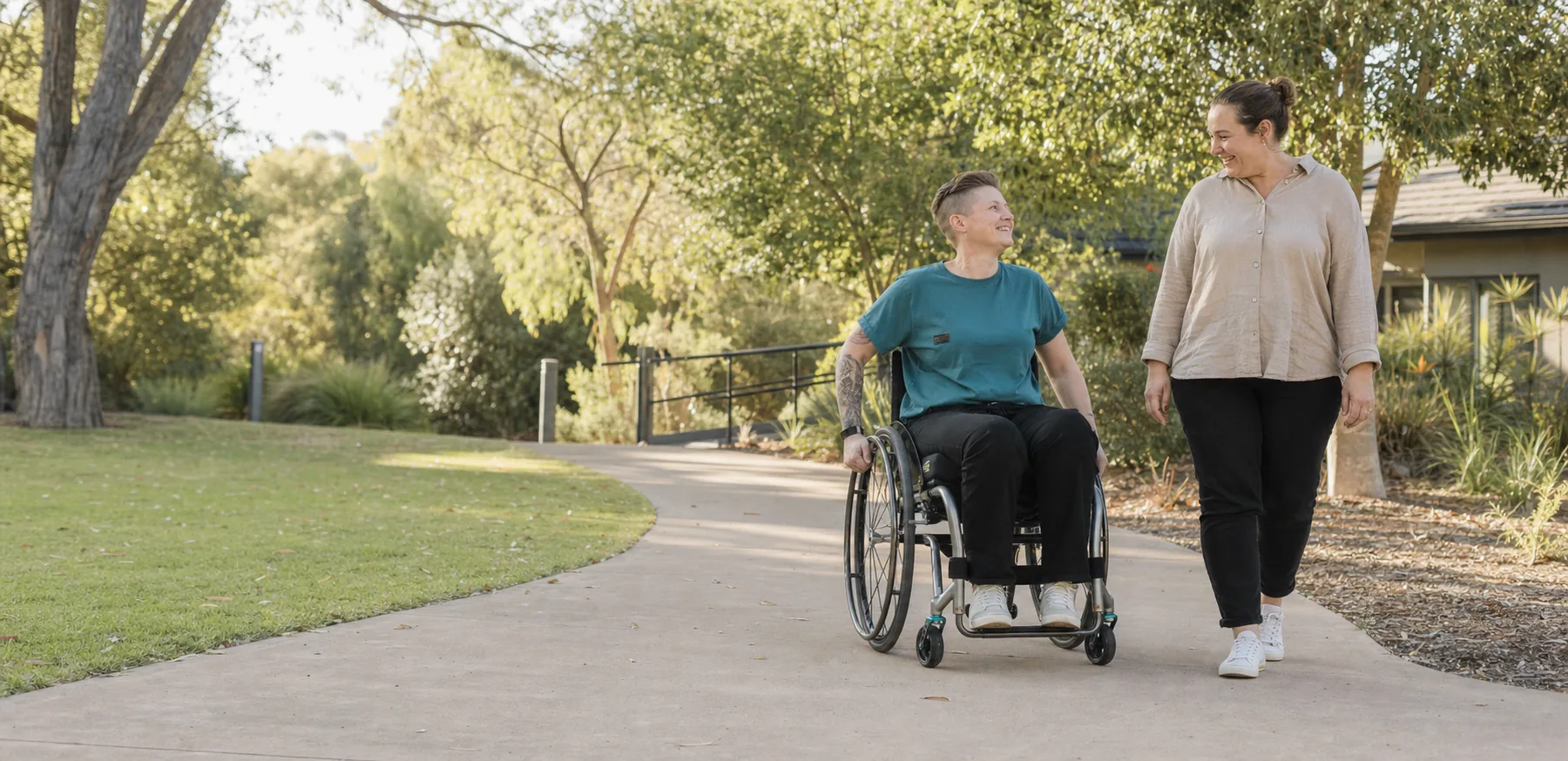

Choosing support at home or exploring a shared-living option is a major decision. It affects daily routines, privacy, relationships, safety, independence and the people a participant chooses to involve. Access4All provides planned drop-in support and a confidential starting point for people exploring shared living options in Perth.
We start with what matters to the person, not simply whether a room or worker is available. We listen to the participant’s goals, routines, communication preferences, cultural needs, preferred area, household preferences and support requirements, then discuss whether Access4All may be a suitable fit.
Current options and availability are discussed privately on request. An enquiry does not guarantee NDIS funding, a tenancy, a room, a worker, or a placement. Any arrangement must be right for the participant, based on consent, choice, suitability, current capacity and the person’s funding or other appropriate arrangements.
At a glance
- Planned drop-in support: agreed support-worker visits at times that suit the participant’s goals and routines.
- Shared living enquiries: a careful, private conversation about whether a current or future shared-home option may be worth exploring.
- Participant-led matching: we consider preferences, communication, routines, location, accessibility and support needs before proposing next steps.
- Clear boundaries: drop-in support, SIL, STA and housing arrangements are different services and options. We explain the difference in plain language.
What is drop-in support?
Drop-in support means a support worker visits at planned times, rather than living in the home or being present 24 hours a day. It can suit a participant who lives independently, with family, in a private rental, or in a shared arrangement and wants reliable practical support around their own life.
Support is planned around the participant’s NDIS goals and agreed service arrangements. Depending on the person’s plan and needs, a visit may include help with everyday routines, meal preparation, shopping, attending appointments, personal care, household tasks, building confidence at home, using public transport, community access or developing skills for greater independence.
We do not assume the same routine is right for everyone. Some people prefer a short morning visit to begin the day well. Others may need support at meal times, before an appointment, after work, or at regular times during the week. The participant chooses what is important and who should be involved in planning.
Who may find this service useful?
Drop-in support or a shared-living exploration may be worth discussing for an adult participant who wants more independence, a young adult planning a future move from the family home, someone whose current arrangement is no longer working well, or a family looking for a sustainable support plan around their relative’s preferences.
It can also be helpful for support coordinators, recovery coaches, LACs and allied-health professionals who need a clear, respectful conversation about local support capacity for a participant. Family involvement is welcome when the participant wants it.
Shared living options: more than an available room
A suitable shared-living arrangement is not simply about an empty bedroom. Before anyone decides whether to proceed, it is important to consider location, accessibility, transport, routines, privacy, visitors, shared spaces, communication style, interests, cultural needs, household expectations and the support required during the day, evening and overnight.
We take a careful matching approach. If an option may be suitable, we explain the next steps and give the participant time to ask questions, involve trusted people and decide whether to continue. There is no pressure to accept an arrangement.
What we discuss before sharing detailed availability
- The participant’s preferred Perth area and transport needs.
- Accessibility, mobility, sensory, communication and health-support considerations.
- Preferred daily routine, sleep routine, food needs, hobbies, faith or cultural considerations and privacy preferences.
- Support goals, including what the person wants to do more independently.
- Whether the participant wants family, a nominee, coordinator, advocate or other trusted person involved.
- Funding context and whether the person needs to speak with the NDIA, plan manager, support coordinator or another adviser.
Examples of how support can work
These are illustrative examples, not real participant stories. Every support arrangement is individual.
Example: building confidence at home
A young adult living with family may want to practise cooking, shopping and managing a weekly routine before considering a future move. Planned drop-in visits can focus on practical skills and confidence, while the family remains involved in the way the participant chooses.
Example: support around a shared home
An adult may already live in a shared arrangement and want reliable assistance with morning routines, cooking, appointments and community participation. The support plan can set out when workers visit, what they help with, who to contact if a routine changes and how feedback is handled.
Example: exploring a different home-and-living option
A family, participant and support coordinator may be considering whether a different arrangement could better support independence and connection. Before discussing a specific option, we identify the participant’s non-negotiables, preferred location, accessibility needs, compatibility considerations and the time needed to make a considered decision.
Drop-in support, shared living, SIL, ILO and STA: what is the difference?
These terms are sometimes used together, but they are not the same.
- Drop-in support means planned visits from a support worker at agreed times.
- Shared living describes a possible living arrangement with other people. It does not by itself decide what NDIS support or funding is appropriate.
- Supported Independent Living (SIL) is a separate home-and-living support type for people who need regular help or supervision at home. SIL funding decisions are made by the NDIA based on the participant’s individual situation.
- Individualised Living Options (ILO) are another type of home-and-living support that may include a tailored mix of formal and informal supports. The NDIS notes that paid drop-in support can form part of some ILO arrangements, but it is not right for everyone.
- Short-Term Accommodation (STA) is separate again. It is not the same as a permanent shared-living arrangement.
Access4All’s SIL & STA homes information is separate. We do not decide NDIS funding or tell a person what the NDIA will fund. If funding or home-and-living options need to be explored, we encourage the participant to speak with their support coordinator, my NDIS contact, planner or another appropriate adviser.
Your rights, agreements and choice
Where a person has both a housing or tenancy arrangement and disability support, these must be understood clearly. A tenancy or housing agreement is different from a service agreement. A participant should be able to understand their options, have information in a way that works for them, and involve people they trust.
A participant should not feel pressured to accept a support provider or living arrangement. If a participant needs independent advocacy, tenancy advice or decision support, we encourage them to seek it. Questions about visitors, privacy, shared spaces, changing supports, concerns, complaints and transitions should be addressed early and respectfully.
How the matching conversation works
- Start with the participant: Tell us the goals, preferred location, routines, support needs, accessibility needs and household preferences.
- Check suitability and capacity: We consider current worker capacity and whether a conversation about an option would be useful.
- Meet, ask questions and decide: The participant can involve trusted people, take time and say no. A first conversation does not commit anyone to a service.
- Agree safe next steps: If there is a suitable fit, we discuss service arrangements, communication, transition planning, feedback and relevant agreements.
What to prepare for an enquiry
You do not need to have every answer. The most useful starting points are the participant’s preferred contact method, general Perth location, key goals, desired support times, accessibility needs, household preferences and the preferred timeframe. For a referral, please ensure you have the participant’s consent before sharing personal information. Do not send detailed clinical records through a general website form.
Frequently asked questions
Do you have a vacancy now?
Availability changes and is discussed confidentially after we understand what the participant needs. We do not publish private household details, addresses or information about people already living in a home.
Can families be involved?
Yes, when the participant wants them involved. We value the knowledge families and trusted supporters bring, while respecting the participant’s decisions, privacy and communication preferences.
Can we meet a worker or see whether the arrangement feels right?
Where a conversation indicates a suitable next step, we explain the process and plan introductions carefully. The participant should have time to ask questions and decide whether an option feels right for them.
Can a participant choose or change their support worker?
Participants can tell us about their preferences and raise concerns. We discuss worker matching, communication and continuity as part of service planning. If needs or preferences change, we work with the participant on appropriate next steps.
Can a participant keep their current support provider?
Participants should understand their choices and the agreements relevant to their situation. Housing and support arrangements need to be clear, fair and lawful. We encourage independent advice where this would help.
Does an available option mean the participant is eligible or funded?
No. Availability does not guarantee NDIS funding, a tenancy or a support placement. Suitability, participant choice, funding and relevant arrangements all need to be considered.
What happens if the participant’s needs change?
Support needs can change. We discuss how changes will be communicated, reviewed and managed, including who should be contacted and when another conversation with a coordinator, clinician or plan manager may be helpful.
Can you support autistic people, people with ADHD or psychosocial disability?
We consider each person’s individual goals, communication preferences and support needs rather than making assumptions based on a diagnosis. Please tell us what helps the participant feel understood, safe and in control.
Do you offer crisis accommodation?
No. This is not an emergency or crisis-housing service. If someone is unsafe or needs urgent housing help, contact emergency services or an appropriate local crisis and housing service.
How quickly can services start?
Timing depends on suitability, worker capacity, consent, service planning and any funding or agreement steps required. We will be honest about current capacity and next steps rather than promising a start date that cannot be met.
Request a confidential conversation
If you are a participant, family member, guardian, support coordinator, LAC, recovery coach or allied-health professional, start with a short confidential enquiry. Tell us what matters to the person and we will discuss whether Access4All may be able to help.
Ask about drop-in support or shared living Make a referral Contact Access4All
Last reviewed: 14 November 2026. General information only. NDIS funding and home-and-living decisions are individual. For official information, see the NDIS guide to home and living options, NDIS information about ILO, NDIS service agreement guidance and the NDIS Commission’s tenancy and support standard.
A routine built around the person
Support can include the community around home
Planned drop-in support may help a participant maintain routines, prepare for an outing or take part in an activity that matters to them. The support arrangement, frequency and activity are always agreed individually; this community garden clip is one example of a calm local outing shared with permission.
Frequently asked questions
How do I get started with Access4All?
Contact our team or send a referral with your suburb, goals and the support you are looking for. We will confirm service suitability, current capacity and the next step.
Which Perth areas do you support?
Our primary focus includes Cockburn, Kardinya and selected nearby Perth suburbs. Availability depends on the service and schedule, so please contact us with your location.